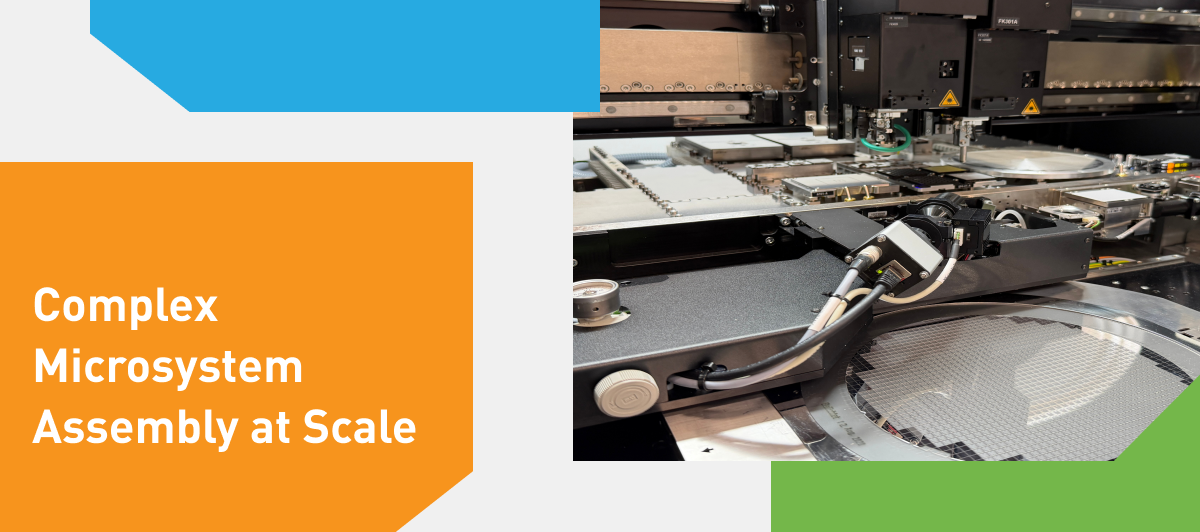
As advanced packaging moves toward larger wafer formats and higher integration density, production stability is becoming a defining capability, particularly for manufacturers scaling complex assemblies beyond R&D into stable volume production.
“How do you stay in control when every new photonic module, power device, or heterogeneous package adds another layer of process complexity?”
When you develop a production die bonder for automated manufacturing, that question becomes very real.
In advanced packaging and heterogeneous integration, manufacturers are building increasingly sophisticated devices at scale. Production environments must manage more materials, more process combinations, and tighter tolerances than ever.
At the same time, expectations are shifting toward fully automated workflows and 12-inch compatible manufacturing, driven by new fab and pilot line investments including programs under the Chips Act and similar initiatives worldwide, redefining what production platforms must deliver.
A familiar line often comes up:
“We can make it work, but it takes too many steps.”
Device architectures are evolving faster than traditional production tools can adapt.
From a product development perspective, the friction points are clear:
- Longer changeovers
- More coordination across tools
- Increasing effort to keep processes aligned
- Difficulty stabilizing processes after development
We began asking what a production platform would look like if it were designed from the start to handle this variability without sacrificing stability. That question led to the development of our next generation production die bonder.
By using this element, you agree that your data will be transmitted to external services (https://www.youtube-nocookie.com) and that you have read our privacy policy.
Why We Started Developing This High-mix Volume Bonder Platform
Advanced packaging is moving deeper into 2.5D and 3D architectures. What once were edge cases are now standard production requirements.
Manufacturers must handle different materials and adapt processes quickly within the same product family. The challenge is not any single step, but keeping workflows stable as integration depth increases.
Production rarely fails inside a single process. It fails in the handoffs between them.
Our objective was clear: consolidate processes instead of spreading them across multiple tools, while maintaining the flexibility required as applications evolve.
A Platform Built Around Production Reality
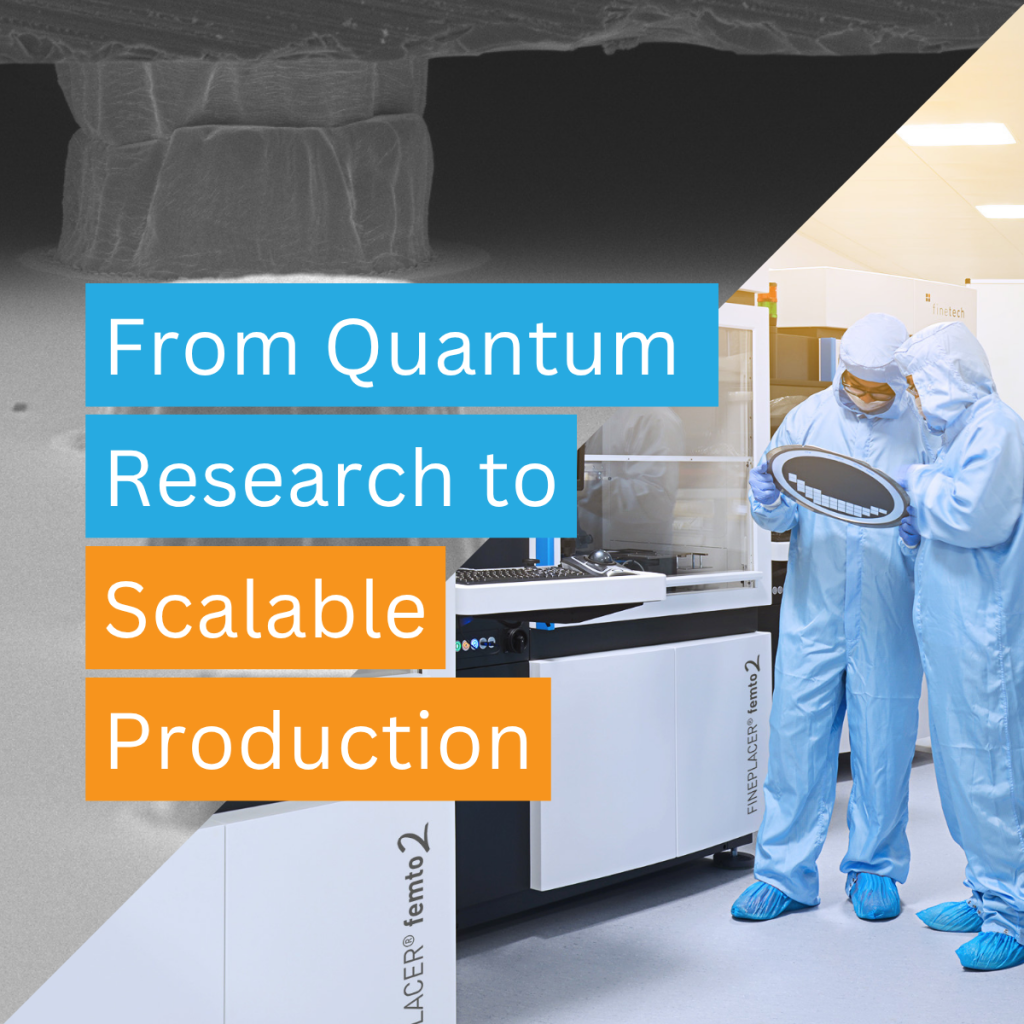
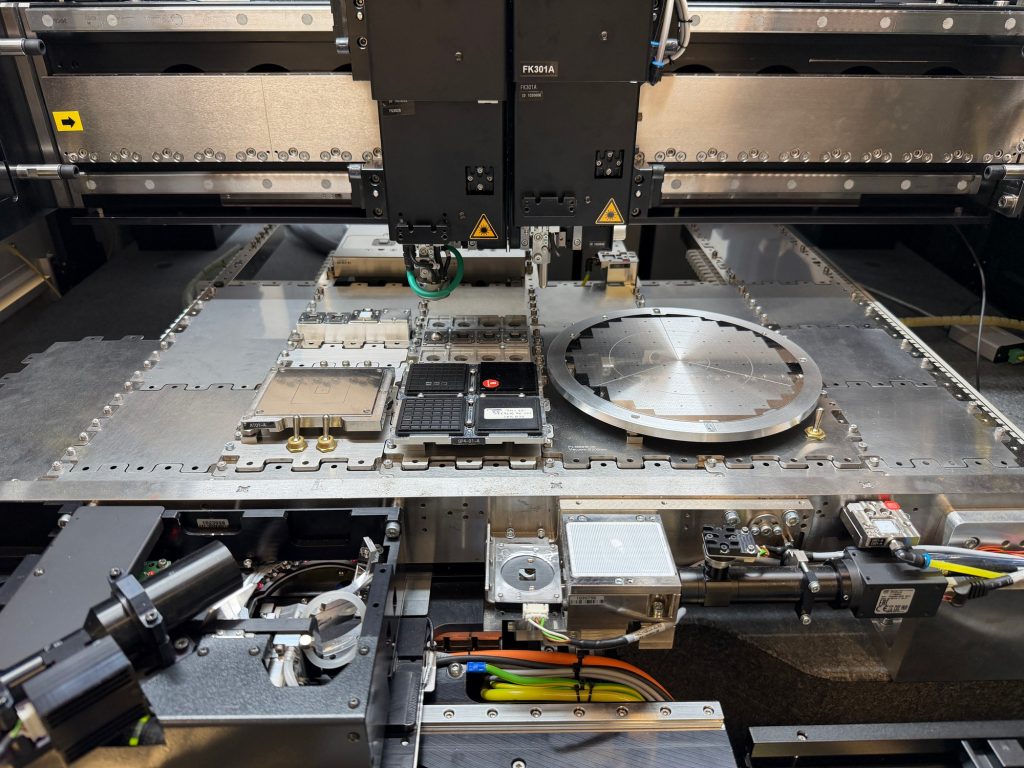
At the core is a rigid gantry architecture designed for industrial environments with full 12-inch wafer capability and 3 µm placement accuracy, reducing errors and improving yield. This is particularly relevant for applications requiring high-precision ultrasonic bonding where process consistency is critical. It aligns with the needs of modern pilot lines and volume production environments where controlled scaling is essential.
The platform integrates:
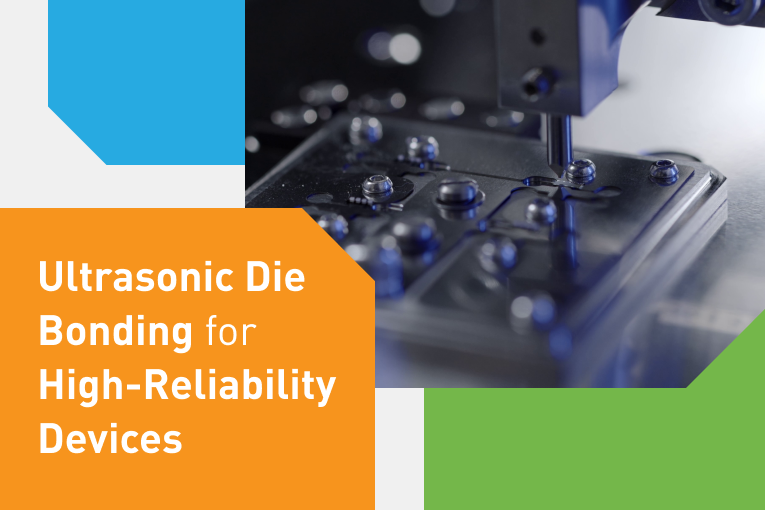
- Ultrasonic bonding
- Adhesive bonding
- Eutectic bonding
- High-speed pick and place
Up to four functional heads and dual heating plates allow different bonding technologies to be combined without operator intervention between runs. Parallel process preparation steps further reduce cycle time.
A multi-slot wafer cassette processes different wafers sequentially, supporting high-mix environments without manual changeover between lots.
But hardware capability alone does not guarantee production stability.
Automation Designed for Stable Output
Volume production depends on predictable material flow, particularly in 12-inch environments where automation expectations are defined by modern pilot and production lines.
This requires full process automation focused on repeatability and process control, combining automated material handling with coordinated workflows that run with minimal operator interaction.
Automation includes:
- Full inline capability for integration into continuous production environments
- Automatic SCARA-based wafer loading and unloading
- Sequential processing of different wafers without operator intervention
Together, these capabilities enable stable, repeatable production flows that reduce variability, support industrial scalability, and allow operators to focus on higher-value tasks.
By using this element, you agree that your data will be transmitted to external services (https://www.youtube-nocookie.com) and that you have read our privacy policy.
Software That Keeps Change Under Control
Process flexibility only works if changeovers remain predictable. The platform’s software environment is designed to simplify configuration and operation so teams can manage workflows, track output, and optimize performance with minimal effort.
- No-code workflow configuration
- Quick process setups
- Reusable recipes
- Automatic calibration
- Parameter monitoring and traceability
- Manufacturing Execution System (MES) connectivity
This reduces setup complexity while maintaining placement accuracy and process control, while enabling integration into digital manufacturing environments and data-driven workflows.
That level of control becomes critical as device architectures continue to grow in complexity.
Built for Increasing Integration Complexity
The new production die bonder supports production across applications such as optical transceivers, LiDAR modules, power devices, MEMS, radar, photonic components, and high-density heterogeneous packages.
As device hierarchies grow more intricate, success depends less on optimizing individual steps and more on stabilizing workflows.
From Development to Scalable Production
This platform represents a step toward a scalable multi-process production environment shaped by real customer requirements.
The objective is clear:
- Predictable output
- Shorter changeovers
- Multiple processes on one system without instability
So How Do You Stay in Control as Photonic, Power, and Heterogeneous Devices Keep Increasing Process Complexity?
At Finetech, this thinking guides how we design production platforms around the stability of the entire manufacturing workflow and the needs of customers scaling complex assemblies into production.
By consolidating multiple bonding technologies and 12-inch wafer support on a rigid gantry architecture built for automation and process consistency, this platform provides exactly that.
From a product developer’s perspective, the goal is not speed, but predictable production as integration demands grow.
Because progress is not measured by device complexity, but by how reliably we can build at scale.